

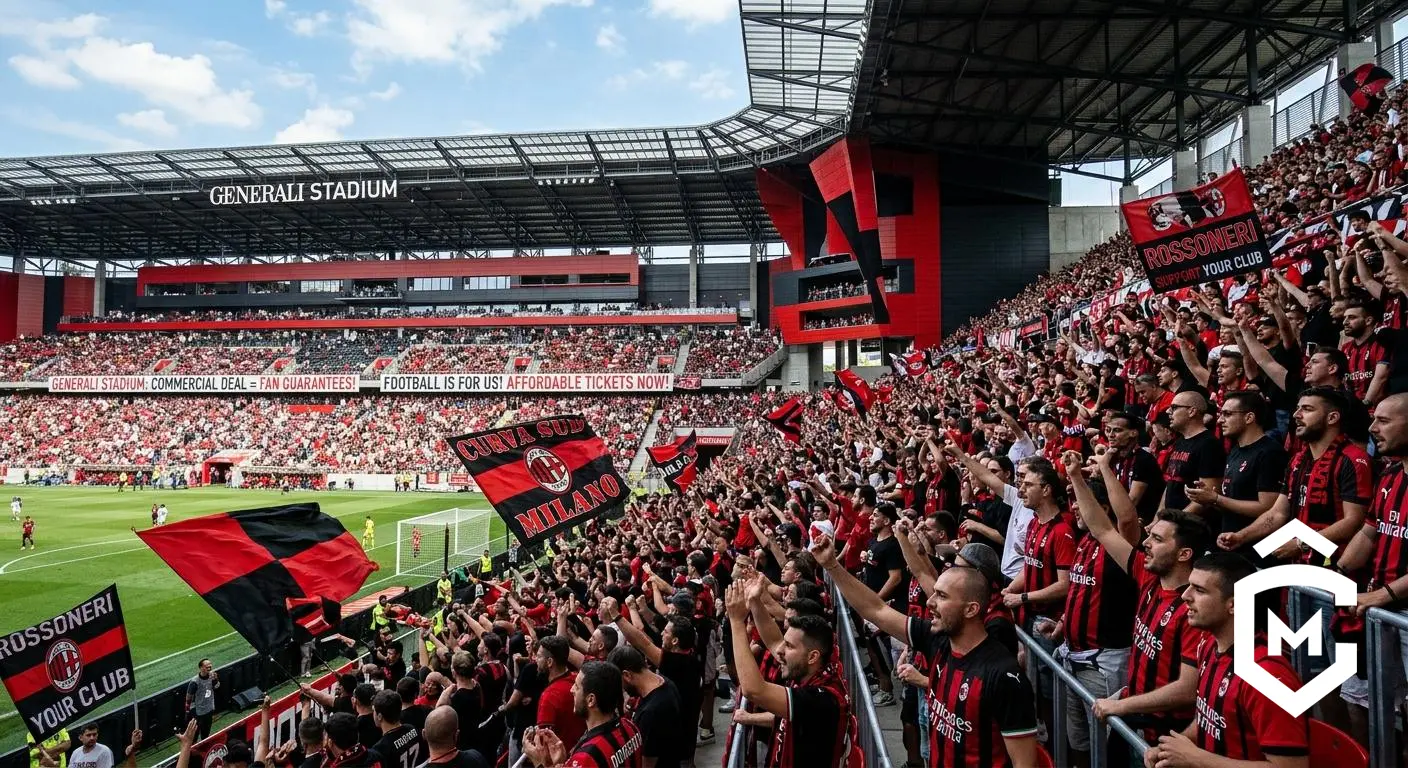
The Generali Stadium — the new ground that Milan and Inter will build together — continues to generate debate. Following the official presentation of the project, further details have emerged about the figures behind the naming rights deal signed with insurance group Generali, prompting reflection on the real-world financial benefits for both clubs.
The Naming Rights Figures
According to reports, the agreement with Generali will bring in a total of €650 million over 20 years. A staggering sum — though shared between the two clubs, meaning each side will receive approximately €16.5 million per year from the naming rights alone. This places the deal among the most lucrative arrangements of its kind in European football, a reflection of both clubs’ global appeal and Milan’s standing as an international city.
Beyond Naming: Other Revenue Streams
The naming rights deal is, of course, just one slice of the revenue pie. Expectations are also high for additional income streams: ticketing, merchandising, hospitality, hotel facilities and parking. The new stadium is conceived as a true destination experience, designed to generate cash flow even on non-matchdays. The model mirrors that of Europe’s best modern venues — from the Allianz Arena to the Tottenham Hotspur Stadium — where the ground becomes a commercial and cultural hub operating 365 days a year. The Generali Stadium project was unveiled with a planned capacity of 71,500 seats, a figure that had already sparked widespread discussion.
13,000 Premium Seats and Fan Concerns
Concerns remain, however — particularly among supporters. The central issue is availability for general admission fans: of the roughly 71,500 seats, approximately 13,000 will be reserved for premium hospitality (skyboxes, VIP areas, private boxes), leaving around 58,000–59,000 seats for regular supporters. While this number is broadly comparable to the current San Siro capacity for standard fixtures, it keeps the questions of pricing and accessibility very much open.
Ticket Prices: No Policy Yet Defined
For the time being, Milan has not yet set out a clear ticket pricing policy for the new stadium. The reasoning is straightforward: construction has not yet begun, and establishing a pricing strategy years in advance would be premature. That said, the concerns of the Rossoneri faithful are legitimate and deserve to be taken seriously. The risk that the new stadium becomes an elite venue, accessible only to those who can afford premium prices, is a challenge the club will need to address openly and responsibly in the years ahead.
The excitement surrounding the Generali Stadium is genuine, and the financial outlook is undeniably positive. The hope is that the new home of Milan will succeed in balancing financial sustainability with accessibility for all supporters — because a stadium filled with Rossoneri passion will always be the best investment of all.