

A situation that refuses to move forward
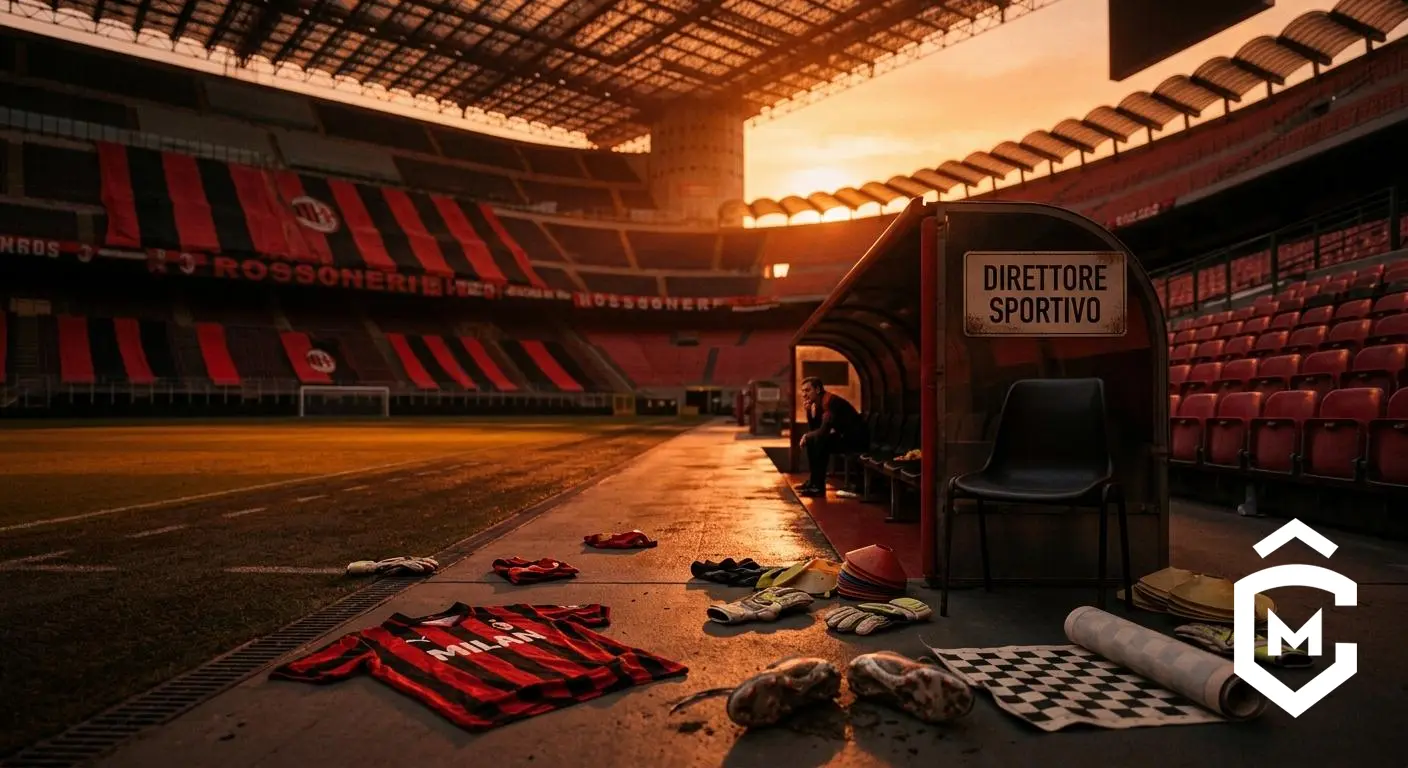
Almost a month after the announcement of the dismissal of the entire sporting management, AC Milan finds itself still without a Sporting Director or a Technical Director. A void that is beginning to weigh heavily, threatening to seriously slow down the planning of the summer transfer window. This is no minor detail: we are talking about the second most decorated club in the world, a globally recognised football institution, currently drifting without clear sporting leadership.
The plan: Kirovski and Gardiner step up to the first team
The latest development from the Milan world concerns a decision attributed to Gerry Cardinale and Zlatan Ibrahimović: promoting Jovan Kirovski and Ben Gardiner — respectively Technical Director of Milan Futuro and data analyst — to operational roles within the first team. A choice driven by the urgent need to fill the gap left by the previous management structure.
It is worth noting that Gardiner has been at Milan since 2019, joining during the Elliott era, while Kirovski has built his experience in youth football and scouting. Both are familiar faces within the club, competent in their specific fields, who now find themselves having to operate on a far bigger and more complex stage.
Alongside them, Milan is reportedly evaluating the appointment of an Italian Sporting Director, yet to be identified or officially announced. A name that needs to emerge soon if the structure is to make any coherent sense.
The foreign DS issue: a practical problem
One of the key reasons pushing Milan towards an Italian profile is strictly regulatory: foreign sporting directors, in order to sign contracts in Italy, must first enrol in a dedicated course and obtain the required federation certification. A process that takes time — a luxury the summer market simply does not allow.
This reality has effectively scaled back Cardinale’s initial ambitions, having openly declared his preference for international profiles and a certain reluctance towards Italian executives. Operational reality, however, has forced a rethink, and the search has now expanded to include Italian candidates. Among the names mentioned, Daniele Pradè, formerly of Fiorentina, has been cited, though many rumours have already been denied or downplayed.
The improvisation that worries insiders
Roberto Bianchessi, a former Milan executive, recently interviewed by Milan News, spoke clearly: his words leave little room for interpretation. According to Bianchessi, there is no defined technical project in place, the club is proceeding by trial and error, without a precise guide. A verdict that echoes the concerns already voiced by agents and other industry professionals, who are watching the situation with growing disbelief.
The core issue remains one of transfer strategy: it is not simply about having someone who can sign contracts — Secretary General Casper Calvelli could handle that — but about building a clear plan for incomings and outgoings, nurturing relationships with agencies and agents, spotting opportunities and acting on them at the right moment. This is expert, specialised work, involving hundreds of variables and thousands of details.
What about Amorim?
There are also suggestions that Sérgio Amorim could serve as the technical reference point of the project, along the lines of an English-style manager. But a coach, however talented and visionary, cannot replace the specific expertise of a sporting or technical director in handling negotiations. These are different, complementary skills — not interchangeable ones. We explored this scenario in depth in a dedicated feature on Amorim’s role during this transitional phase.
Milan deserves better
We are nearly at the end of June 2026, the transfer market is already in full swing, Europe’s top clubs are moving decisively and Milan is still waiting to find its sporting compass. The hope of the Rossoneri faithful is that this period of uncertainty closes quickly, with bold decisions worthy of the club’s prestige. Milan has the resources, the history and the passion to emerge from this moment and return to the top: what is needed now is clarity, speed and a shared vision. The Devil knows how to rise again.