


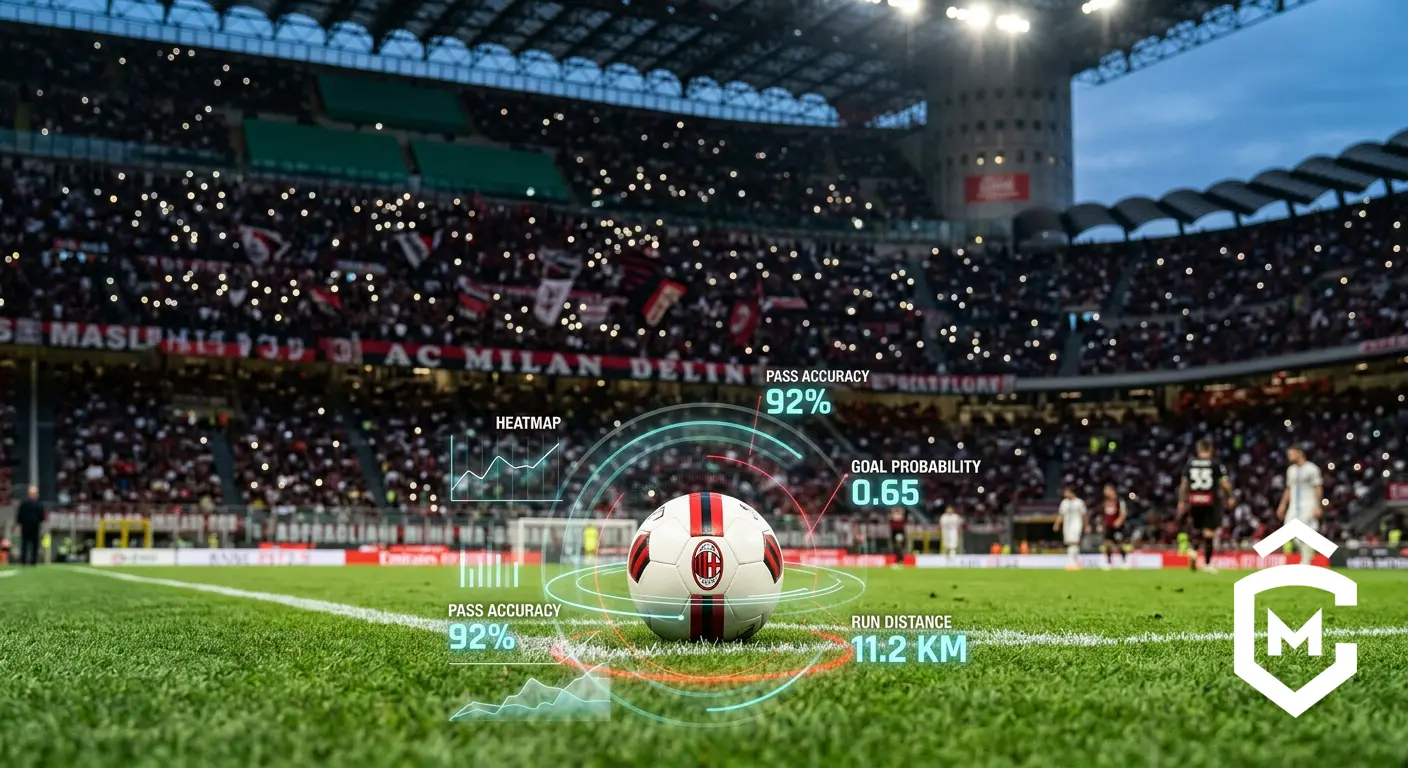
AC Milan Embraces “Moneyball”: Data and Algorithms at the Core of the New Project
The new management structure taking shape at AC Milan tells a story that goes well beyond a simple change of faces. Behind the choices of Markus Krösche, Timmo Hardung and Bobby Gardiner lies a very specific philosophy: data-driven football, widely known as the Moneyball model, applied to elite-level football. A vision imported directly from the United States and already tested with notable success at several European clubs.
What the Moneyball Model Means in Football
The term Moneyball originates in American baseball and describes a sports management method based on advanced statistical analysis, big data and predictive algorithms, rather than traditional empirical evaluation. In football, this approach translates into identifying players undervalued by the market but with strong statistical profiles — signing them at competitive prices, developing them and selling them at a profit, generating significant transfer gains for the club.
This is precisely the model that Gerry Cardinale’s RedBird Capital Partners intends to embed structurally into AC Milan: a virtuous cycle of algorithmic scouting, player development and resale. An approach that has worked for clubs such as Eintracht Frankfurt and RB Leipzig, but one that demands very careful management in a competitive and media-intense environment like Italian football.
Bobby Gardiner: The Symbol of the Technological Shift
The promotion of Bobby Gardiner to Head of Scouting is the clearest signal of this direction. Gardiner is not a traditional talent scout in the classic sense: he is a performance analytics expert, accustomed to working with data models, GPS tracking, pressure metrics and spatial mapping. His elevation makes it clear that Milan wants to integrate conventional scouting with algorithmic methods, placing data intelligence at the very centre of squad-building.
This approach has caused debate at Milan before. Figures like Zvonimir Boban had previously raised concerns about a system where the assessment of a player was inevitably filtered through data frameworks, sometimes at the expense of direct, human knowledge of the individual. The story of Dani Olmo — technically identified but never signed, before going on to become one of Europe’s finest midfielders — remains a concrete example of why data alone is never enough.
The Risk and the Great Opportunity
There is no doubt that a well-constructed, data-driven model, backed by a competent technical structure, can represent an enormous competitive advantage. Clubs like Brighton in the Premier League or Bayer Leverkusen in the Bundesliga have shown that it is possible to compete at the highest level with targeted, intelligent investment, precisely through a smart use of data analysis.
The real challenge for AC Milan will be adapting this model to the Italian context: a league with tactical, physical and media dynamics very different from those in England or Germany. Krösche and Hardung, drawing on their experience at Eintracht Frankfurt, bring first-class international expertise. The club’s task now will be to build a genuine synergy between the modernity of the method and the deep cultural identity of AC Milan.
Milan has the human resources and the vision to build something truly special. The path chosen is ambitious, the challenge is exciting, and the Rossoneri faithful — always among the most passionate supporters in the world — deserve to see a project that lives up to the name it carries.