

A defeat that weighs more than the scoreline
AC Milan collapse at home against Udinese, losing 3-0, plunging into a crisis that goes well beyond ninety minutes of football. It is not just a matter of points — four defeats in the last seven matches is a damning record — but of identity, mentality, and a squad that crumbles at the worst possible moments. The challenge now is simple: react, and do so immediately, before it is too late.
The match against the Friulian side, played in mid-April 2026, showed a Milan that was poor in every department: tactics, shape, physical intensity and, above all, mental approach. A team that had gone to Bologna and won in mid-February, sitting comfortably in the top half of the table, suddenly finds itself in free fall, with the alarming spectre of missing out on next season’s Champions League.
The mental problem: Ricci’s words say it all
The post-match statements brought the real issue into sharp focus. Samuele Ricci, the Rossoneri midfielder, admitted the team was «not mentally present» on the pitch. A statement that reveals — perhaps too clearly — the psychological state of the squad in this final stretch of the season.
Being physically on the field is not enough: high-level football is won in the mind before it is won with the feet. And when the fear of losing overrides the desire to win, the results become inevitable. The defeat in Naples and now the one against Udinese paint a picture of a team that has gone into a defensive mode — not on the pitch, but in its head.
Formation or mentality? The tactical debate
Much has been debated about the formation chosen by Massimiliano Allegri for the Udinese match: the 4-3-3, a departure from the 3-5-2 used more regularly in recent weeks. But the problem does not seem to lie in the system. With the 3-5-2 Milan lost to Napoli, Lazio and Parma; with the same setup they only scraped a win in the dying minutes against Cremonese, a side fighting relegation. The conclusion is clear: a formation alone neither saves nor condemns — it is the legs and the heads of the players that make the difference.
Christian Pulisic, one of the standout performers in the first half of the season, missed a clear chance in front of goal. The American — whose goalscoring record is among the best in the attacking line — is visibly going through a physical and mental dip, as are several teammates: Fikayo Tomori, Davide Bartesaghi, Strahinja Pavlović, Luka Modrić and Rafael Leão were all below their best in a collective performance to forget.
The San Siro whistles: a strong but passionate message
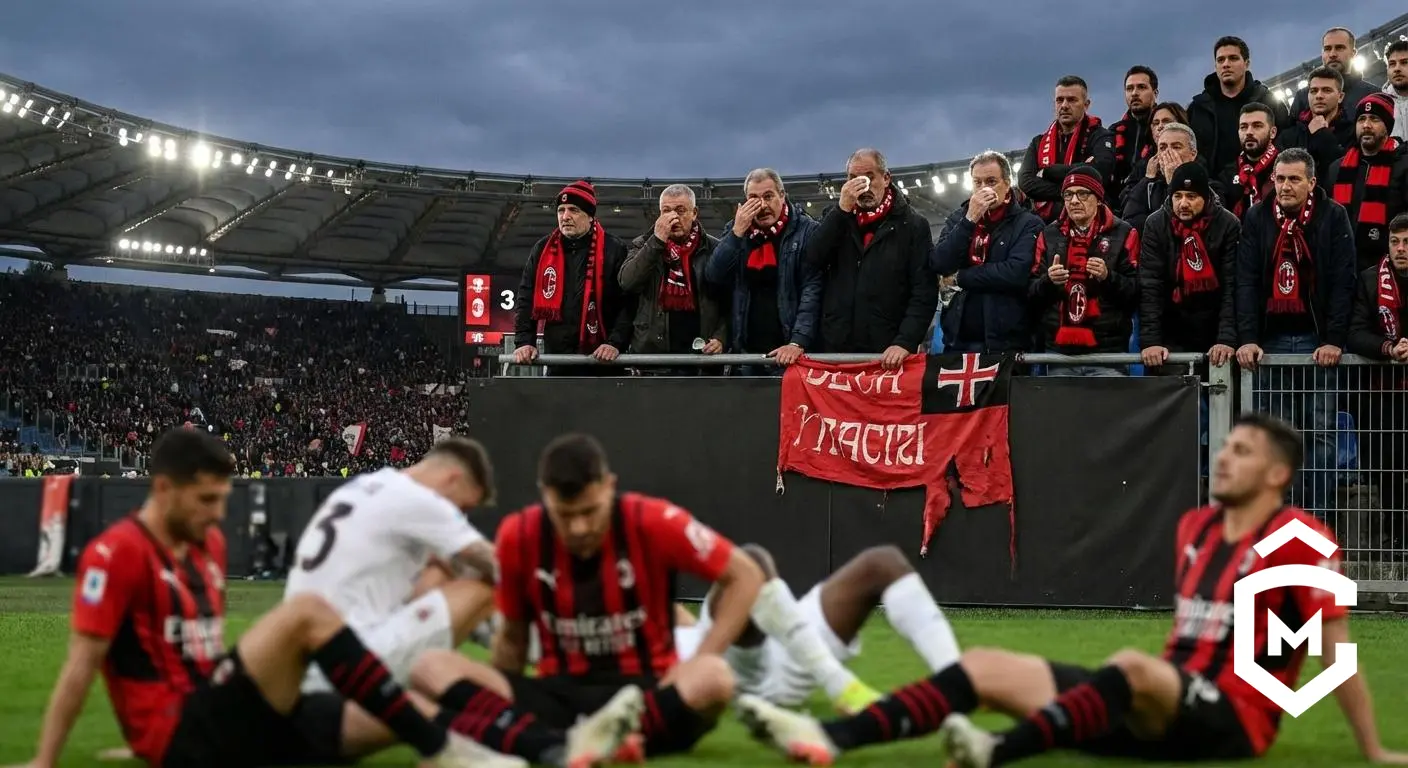
The San Siro crowd did not hold back — whistles rained down on the manager, the squad and the board. A harsh signal, but an understandable one: Milan supporters love this shirt with a fierce, visceral passion and they demand effort and respect. The whistles are not abandonment — they are a cry of exasperated love, a demand to see a Milan worthy of its name.
Rafael Leão was among those most targeted. The Portuguese talent failed to deliver, and the inconsistency that too often defines his performances is once again a central topic. Social media posts calling for unity are not enough: the real Leão — the devastating, unstoppable version — needs to show up on the pitch.
The transfer market: the Füllkrug question
One of the most discussed topics concerns the January transfer decisions. The signing of Niclas Füllkrug, the German striker brought in on loan, has not lived up to expectations. The criticism is sharp: if in January Milan were close to the top of the table and the need for attacking reinforcements was clear, opting for a profile that has not proven decisive represents a missed opportunity and a signal of limited ambition.
Responsibility here points upward to the board: if the manager requested a high-calibre signing to secure Champions League qualification comfortably and the response fell short, then part of the blame for the current situation rests with the club’s decision-makers.
Allegri under fire, but the picture is more complex
The name of Massimiliano Allegri has come back to the forefront of fan discussions. The experienced Tuscan coach is accused of failing to prevent the emotional collapse of the group when the first warning signs were already visible. A seasoned manager, the argument goes, should be able to read his squad and intervene before a negative spiral becomes unstoppable.
Yet the picture is more nuanced: without the right tools, even the best manager in the world struggles. Responsibility is spread across the entire chain of command, from the club’s hierarchy down to the pitch. What matters now is that everyone plays their part in turning things around.
Looking ahead to Verona: the obligation to respond
The next fixture is an away trip to Verona, and Milan cannot afford another slip. Taking three points against the Gialloblu is imperative — not only to consolidate a top-four finish, but also to rebuild confidence and cohesion ahead of the season run-in.
Champions League qualification remains the minimum target for this campaign. Milan have the talent and resources to achieve it: they just need the right spark to reignite the engine. The history of this club shows that great comebacks are always possible, and the fans — despite the whistles — are waiting to cheer again.
Forza Milan: the end of the season is still to be written.